
Different Types of Wood Vinyl Flooring Explained
- branddonlim
- 2 hours ago
- 6 min read
You want a floor that looks stunning, handles everyday mess, and does not cost a fortune to maintain. That is exactly what wood vinyl flooring delivers. It has quickly become one of the most popular vinyl flooring Singapore homeowners choose for modern homes, and for good reason. You get the warm, natural beauty of real timber without the high price tag, the swelling in humid weather, or the endless upkeep.
Whether you live in an HDB flat, a condominium, or a landed property, this guide breaks down every type of wood vinyl flooring available today so you can pick the right one with confidence.
What is Wood Vinyl Flooring?
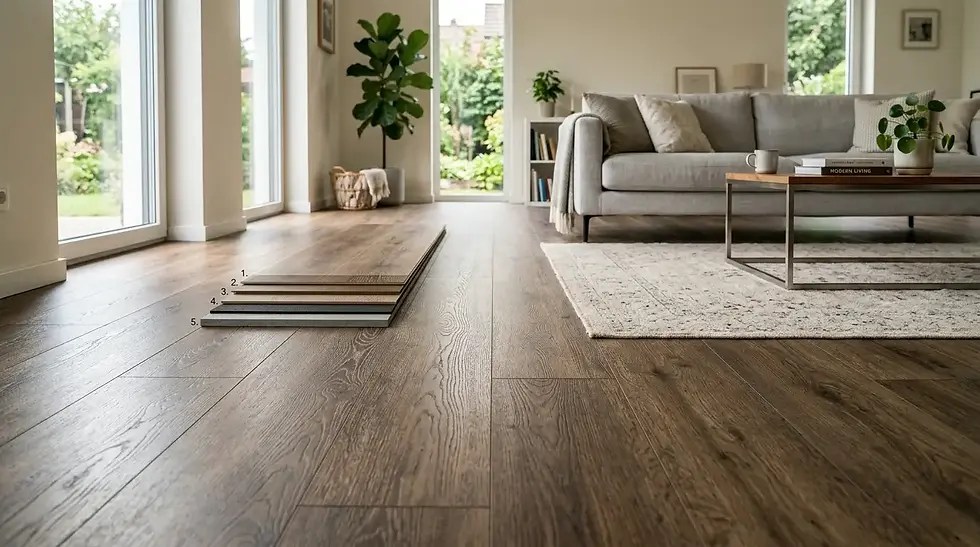
Wood Vinyl Flooring is a synthetic flooring material designed to look like real wood. It is made using multiple layers of PVC vinyl with a printed wood design on the top layer. A protective coating is added to increase durability and resistance against scratches and stains.
This flooring solution is widely used in modern home renovation projects in Singapore because it performs well in humid weather. It does not swell easily and remains stable in changing indoor conditions.
Types of Wood Vinyl Flooring
1. Luxury Vinyl Tile (LVT)
Luxury Vinyl Tile comes in individual tile pieces that carry realistic wood patterns and textures. The surface feels soft and comfortable underfoot, which makes it a great option for spaces where you spend a lot of time standing or walking barefoot, such as bedrooms and home offices.
LVT also performs well in terms of noise reduction, which is a real advantage in high-rise apartments. Its surface resists stains and spills, so a quick damp mop is all you need to keep it looking clean.
Best for: Bedrooms, living rooms, home offices
2. Luxury Vinyl Plank (LVP)
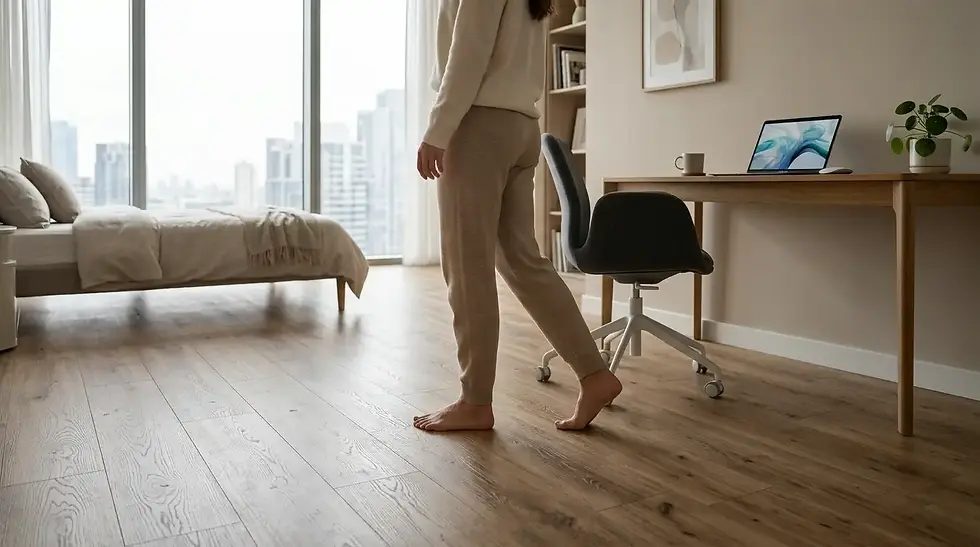
Luxury Vinyl Plank is designed to replicate the long, continuous look of real hardwood planks. When laid across a room, it creates a smooth and flowing wood effect that feels open and natural. The wear layer on LVP is built to handle furniture movement, pet claws, and heavy foot traffic without showing scratches.
This is one of the most commonly installed flooring types in Singapore homes because it balances aesthetics and durability so well.
Best for: Living rooms, hallways, dining areas
3. SPC Vinyl Flooring (Stone Plastic Composite)
SPC flooring has a rigid core made from a mix of limestone powder and stabilisers. This gives it exceptional hardness and dimensional stability. It does not dent under heavy furniture and holds its shape even in rooms with frequent temperature changes.
Because it is fully waterproof and highly resistant to Singapore's humidity, SPC works particularly well in kitchens, bathrooms, and utility areas, making it a popular choice for homeowners looking for stone vinyl flooring with added durability. It also delivers a solid, firm feel underfoot that many homeowners prefer.
Best for: Kitchens, bathrooms, high-traffic commercial spaces
4. WPC Vinyl Flooring (Wood Plastic Composite)
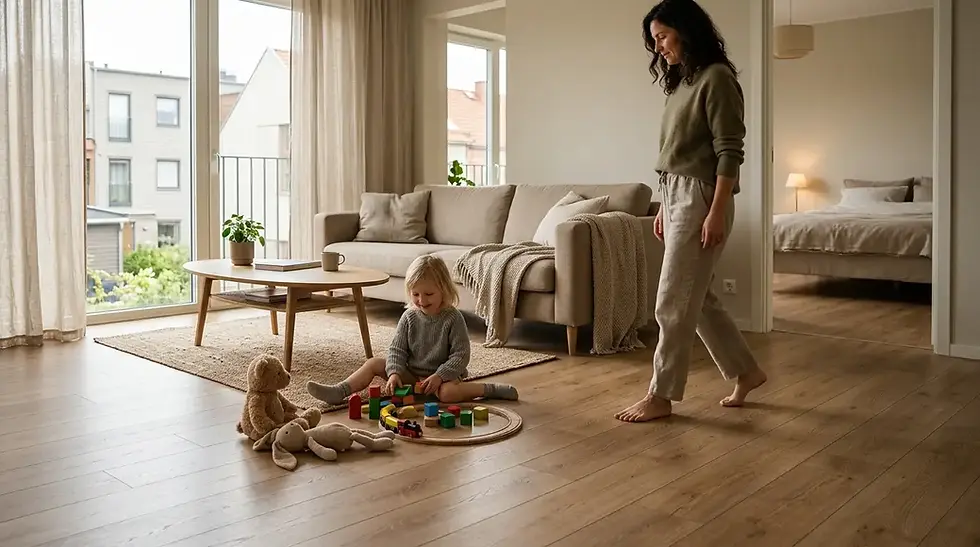
WPC flooring shares some similarities with SPC but has a foamed core that makes it noticeably softer and warmer underfoot. This cushioned feel makes it comfortable for bedrooms and family living areas where children play or people sit on the floor.
It also has strong acoustic properties, reducing the sound of footsteps between floors, which is a practical benefit for multi-storey homes and apartments. Like SPC, it is fully waterproof and handles everyday spills without any issues.
Best for: Bedrooms, family rooms, nurseries, apartments
5. Sheet Vinyl Flooring with Wood Design
Sheet vinyl comes in large continuous rolls with a printed wood grain design. Because there are no joints or seams, it creates a completely smooth surface that blocks moisture from reaching the subfloor underneath.
It is one of the most affordable flooring options available and is widely used in clinics, commercial spaces, and budget-friendly home renovation projects. Installation is straightforward, maintenance is minimal, and the seamless surface makes it very easy to clean.
Best for: Utility rooms, commercial spaces, budget renovations
Benefits of Wood Vinyl Flooring in Singapore Homes
Singapore's tropical climate puts flooring through a tough test every day. Wood vinyl flooring handles these conditions well and brings real advantages to local homeowners:
Moisture and Humidity Resistant: Wood vinyl flooring does not absorb humidity from the air. No warping, swelling, or cracking, even in bathrooms, kitchens, or high-humidity HDB flats and condominiums.
Low Maintenance: A quick sweep and light damp mop are all that is needed. No expensive polishes, special cleaning solutions, or periodic refinishing required, saving time and money.
Wide Design Choices: Available in light oak, cool grey, deep walnut, and many other wood grain finishes, including contemporary styles inspired by MicroCement Vinyl Flooring. Easy to match any interior style, from Scandinavian minimalist to warm traditional looks
Comfortable Underfoot: Noticeably softer and warmer than ceramic tiles, making it ideal for bedrooms and living areas where family members spend long hours barefoot.
Noise Reduction: Many vinyl plank options come with built-in acoustic underlays that reduce noise between floors, a practical benefit for high-rise living in Singapore.
Long-Lasting Durability: Quality rigid core vinyl plank flooring with a thick wear layer resists daily scratches, dents, and heavy foot traffic, making it a smart long-term investment.
Choosing by Installation Method
The way your floor is installed affects both the final cost and the time needed to complete the renovation. There are three main methods to consider.
Click-Lock System: Planks snap together without any adhesive. They lock into place and create a floating floor that moves naturally as one unit. This is the most popular option for DIY installations and weekend home projects.
Glue-Down Vinyl: A specialist adhesive is spread across the subfloor before each plank is pressed firmly into place. This creates a permanently fixed surface with zero movement. It works best in large commercial spaces or open-plan areas where stability is a priority.
Loose Lay Planks: These planks rely on a heavy friction backing to grip the subfloor. No adhesive is needed. They stay in position through weight and friction alone, and a single damaged plank can be lifted and replaced in seconds without disturbing the rest of the floor.
Selecting the Right Flooring for Each Room
Every area of the home presents unique challenges, meaning certain vinyl types perform better in specific rooms.
Room Type | Recommended Vinyl Option | Key Reason for Choice |
Kitchens & Bathrooms | SPC Vinyl Flooring | Maximum water resistance, resists heavy drops, and handles humidity. |
Bedrooms & Living Rooms | WPC Vinyl Flooring | Extra underfoot cushion, warm feel, excellent sound dampening. |
High-Traffic Hallways | Thick Wear Layer LVP | Resists scuffs from shoes, easy to clean daily dirt. |
Utility Rooms | Sheet Vinyl | Seamless coverage protects against appliance leaks. |
Maintenance Tips
Wood Vinyl Flooring is easy to maintain with simple daily care. Regular cleaning and gentle handling keep the surface fresh, shiny, and long-lasting without much effort.
Regular sweeping removes dust, dirt, and small particles from Wood Vinyl Flooring
Use a soft broom or dry mop for daily cleaning
A damp mop helps keep the surface clean and restores shine
Avoid strong chemical cleaners, as they can damage the protective layer
Use gentle floor cleaners for safe long-term maintenance
Furniture pads help prevent scratches from chairs, tables, and heavy items
Clean spills immediately to avoid stains and marks
Keep moisture under control to maintain flooring quality and appearance
Conclusion
Wood vinyl flooring offers a winning combination of style, durability, and easy maintenance that suits Singapore's climate and modern lifestyle perfectly. Whether you go for the soft comfort of WPC in the bedroom, the rock-solid strength of SPC in the kitchen, or the classic look of LVP across your living areas, there is a type that fits every room and every budget.
Take your time to match the right flooring to each space in your home. The right choice will serve you well for many years and keep your home looking beautiful with very little effort.
FAQ’S
Q1: What is the best way to clean wood vinyl flooring without damaging it?
Use a dry microfiber mop daily and follow up with a damp mop using warm water and a mild pH-neutral cleaner. Always wring the mop well. Avoid bleach and harsh chemicals as they damage the protective wear layer.
Q2: Is wood vinyl flooring waterproof and suitable for bathrooms and kitchens in Singapore?
Yes. SPC and WPC vinyl flooring are fully waterproof and handle Singapore's humidity well. They do not swell or warp in wet areas. Just make sure the seams are properly sealed during installation.
Q3: How long does wood vinyl flooring last in a Singapore home?
With regular care, it lasts between 15 and 25 years. A thicker wear layer of 0.5mm or above gives better durability and scratch resistance in high-traffic areas.
Q4: What is the difference between SPC and WPC vinyl flooring?
SPC is harder, more rigid, and fully waterproof, best for kitchens and bathrooms. WPC is softer and more cushioned underfoot, making it a better fit for bedrooms and family rooms where comfort is the priority.
Q5: Can wood vinyl flooring be installed over existing tiles in Singapore?
Yes, as long as the existing tiles are flat, firm, and crack-free. Any uneven areas greater than 3mm must be levelled first to prevent the planks from shifting or cracking after installation.


Comments